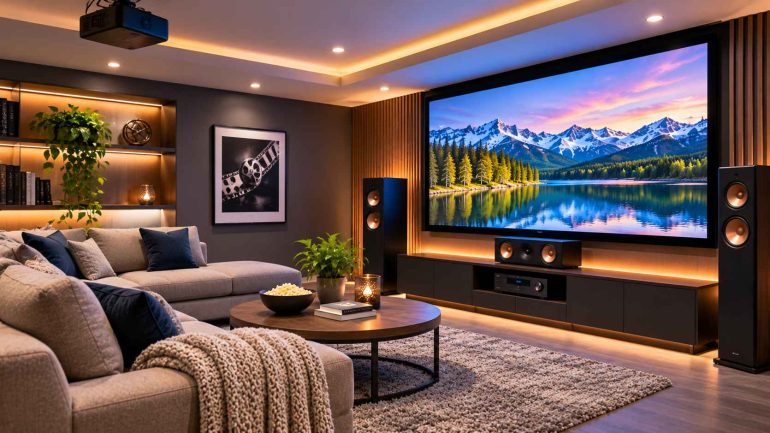
A home entertainment space should offer more than a large television and comfortable seating. Whether it is a dedicated home theatre, a modern media room, or a multifunctional living area, the most enjoyable spaces bring together thoughtful interior design, practical technology, and everyday comfort.
For some homeowners, the ideal setup involves watching films with family. Others may prioritize gaming, music, sports, or hosting friends for special occasions.
Creating a space that supports these activities requires careful planning. Room dimensions, seating arrangements, lighting, speaker placement, and equipment compatibility can all influence the final experience.
The goal is not necessarily to purchase the most expensive technology. It is to create an inviting environment where audiovisual equipment complements the design rather than competing with it.
Start With Your Lifestyle and Entertainment Preferences
Before choosing equipment or furniture, consider how the entertainment space will actually be used.
A family that regularly enjoys movie nights may prioritize comfortable seating and clear dialogue. Someone who listens to music may place greater importance on speaker positioning and room acoustics.
Homeowners who enjoy gaming might consider display responsiveness, equipment connections, and seating arrangements.
The room’s flexibility also matters.
A dedicated home theatre can be designed primarily around watching films, while a shared living room may need to accommodate conversations, reading, and everyday family activities.
Understanding these priorities early can help guide decisions about layout, technology, and furnishings.
Homeowners exploring custom home theatre installation services may also benefit from discussing their intended activities before selecting equipment.
How Room Dimensions Influence Entertainment Design
The size and shape of a room affect how audiovisual equipment should be arranged.
A large open-plan living area may require different planning from a compact basement media room.
Ceiling height, windows, doorways, and existing furniture can influence viewing angles and speaker placement.
For example, positioning a television opposite large windows may create glare during daytime viewing.
Similarly, placing seating too close to a large display may feel uncomfortable for some viewers.
Room planning should also consider movement.
People should be able to enter, leave, and move around the space without navigating awkward furniture arrangements or exposed cables.
A practical layout balances comfortable viewing positions with the room’s everyday functionality.
Choosing the Right Television or Projector
Televisions and projectors offer different advantages depending on the entertainment environment.
Modern televisions are often practical for multifunctional rooms because they can provide bright images without requiring extensive control over surrounding light.
Projectors may appeal to homeowners who want a larger cinematic image, particularly in rooms where lighting can be managed.
However, the ideal choice depends on room dimensions, viewing distance, ambient light, and installation requirements.
Consider Viewing Comfort
Bigger is not automatically better.
A display should feel comfortable from the main seating positions without requiring viewers to constantly move their heads.
The appropriate size depends on resolution, content preferences, and personal comfort.
Plan for Everyday Lighting
Rooms with significant natural light may require additional consideration when selecting projection equipment.
Homeowners should evaluate how the display will perform during the times they most frequently use the space.
Why Speaker Placement and Room Acoustics Matter
Good audio contributes significantly to an enjoyable entertainment experience.
Clear dialogue, balanced music, and convincing sound effects can make films and television more engaging.
However, sound quality depends on more than purchasing capable speakers.
Room acoustics influence how sound travels and reflects from walls, floors, ceilings, and furniture.
Hard surfaces may create noticeable reflections, while rugs, curtains, and upholstered furniture can influence reverberation.
Speaker placement also affects the listening experience.
For example, placing speakers behind large furniture or in unsuitable locations may reduce clarity.
Homeowners should consider both equipment positioning and the room’s existing materials.
Acoustic panels or other treatments may help address particular problems, but they should be selected according to the room rather than installed without a clear purpose.
Creating the Right Atmosphere With Lighting
Lighting influences both the appearance and functionality of an entertainment room.
Bright overhead lights may be useful for cleaning, organizing, or social activities, but softer lighting often feels more comfortable during films.
A layered lighting approach can provide flexibility.
Ambient Lighting
Recessed fixtures, wall lights, and indirect lighting can create a welcoming atmosphere without dominating the room.
Accent Lighting
Subtle lighting behind a display or along shelving can highlight architectural details and contribute to the overall design.
Adjustable Controls
Dimmable fixtures and compatible smart lighting systems may allow homeowners to change the atmosphere for different activities.
However, lighting should not create distracting reflections on the screen.
The most effective design combines appearance, practicality, and comfortable viewing conditions.
Integrating Technology Without Creating Clutter
Entertainment equipment can introduce numerous cables, remote controls, speakers, and electronic components.
Without planning, these elements may make a carefully designed room feel crowded.
Thoughtful integration can help technology blend into the surrounding interior.
Wall-mounted displays, appropriately ventilated media cabinets, and organized cable routes can create a cleaner appearance.
Furniture with dedicated equipment storage may also be useful.
However, electronic components require suitable ventilation and access for maintenance.
Concealing equipment should not make it difficult to operate, service, or replace.
Homeowners can also consider finishes and materials that complement their existing décor.
A well-integrated system should feel like a natural part of the room rather than an assortment of unrelated devices.
Planning Wiring and Equipment Placement Early
One of the most practical steps in home theatre design is planning technical requirements before major renovations begin.
Speaker cables, power outlets, networking connections, and equipment locations can influence construction and furniture arrangements.
For example, installing ceiling speakers or concealed wiring may be easier when access is available during renovation work.
Waiting until walls and finishes are completed can introduce additional complications.
Homeowners should also consider where receivers, streaming equipment, and other components will be positioned.
Appropriate cable routing, ventilation, and equipment access are important.
The CEDIA home technology resources provide information about connected home technology and professional integration.
Consulting appropriately qualified professionals during planning can help homeowners understand installation requirements before committing to a particular design.
Making Entertainment Systems Easy to Use
An impressive entertainment setup can become frustrating when operating it requires several complicated steps.
Homeowners should consider how household members will control televisions, speakers, streaming devices, and lighting.
Compatible control systems may allow selected functions to operate through a remote, touchscreen, or mobile application.
For example, a movie-night setting might adjust compatible lighting and activate entertainment equipment.
However, not every device works with every control platform.
Compatibility should be confirmed before purchasing equipment.
For homeowners in Ottawa and surrounding areas, Signature Audio Video provides audio/video equipment and integration solutions.
Professional planning may help coordinate equipment selection, connections, and practical controls according to the intended setup.
Balancing Design Ambitions With a Realistic Budget
Creating an attractive entertainment space does not require replacing every existing component.
Homeowners can begin by identifying which improvements will make the greatest practical difference.
For some rooms, adjusting seating and lighting may be more important than purchasing a new display.
Other spaces may benefit from better speaker positioning or more organized equipment storage.
A realistic plan should account for furniture, equipment, wiring, installation, and possible future upgrades.
It is also worth considering whether selected components can be maintained or replaced without redesigning the entire room.
Thoughtful spending involves prioritizing functionality and comfort rather than assuming that higher prices always produce a better experience.
Conclusion: Bringing Comfort, Design, and Technology Together
A successful home entertainment space combines practical audiovisual technology with thoughtful interior design.
Room dimensions, furniture placement, lighting, acoustics, and equipment compatibility all influence how the finished space looks and functions.
By identifying personal entertainment preferences, planning technical requirements early, and choosing equipment suited to the room, homeowners can create an environment that feels comfortable and inviting.
Professional guidance may also be useful when installations involve complex wiring, multiple speakers, or integrated control systems.
Ultimately, the best entertainment space is not defined by the number of devices it contains. It is a place where technology works naturally with the surroundings, allowing family members and guests to relax, connect, and enjoy their favourite entertainment.